


Introduction
The demand for cybersecurity professionals is growing rapidly as businesses face increasing digital threats and data breaches. However, getting a job in this competitive field requires more than just technical knowledge. A well-crafted cybersecurity resume is your first opportunity to impress recruiters and demonstrate your value. Many candidates struggle to present their skills effectively, which often leads to missed opportunities even when they are qualified.
A strong cybersecurity resume should highlight your technical expertise, certifications, real-world experience, and problem-solving abilities in a clear and structured way. It should also be optimized for applicant tracking systems (ATS), which many companies use to filter candidates. This guide will walk you through everything you need to know to create a professional, SEO-optimized, and job-winning cybersecurity resume.
What Is a Cybersecurity Resume?
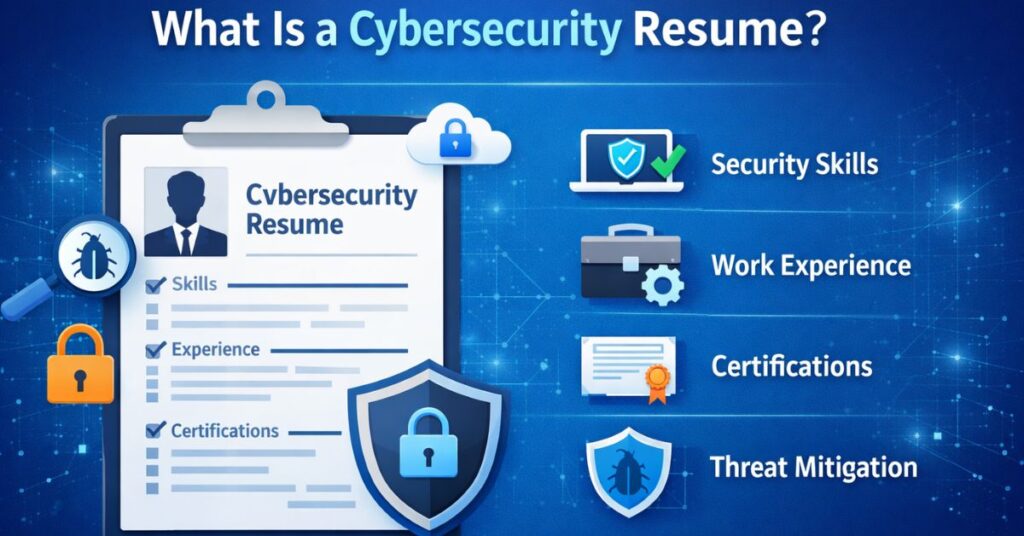
A cybersecurity resume is a professional document that showcases your skills, experience, certifications, and knowledge related to information security. It is tailored specifically for roles such as security analyst, penetration tester, SOC analyst, and ethical hacker. Unlike a general IT resume, it focuses heavily on security tools, risk management, and threat mitigation techniques.
Employers in cybersecurity look for candidates who can protect systems, detect vulnerabilities, and respond to incidents effectively. Therefore, your resume must demonstrate both technical proficiency and practical experience. It should also reflect your understanding of security frameworks, compliance standards, and modern cyber threats.
Key Components of a Cybersecurity Resume
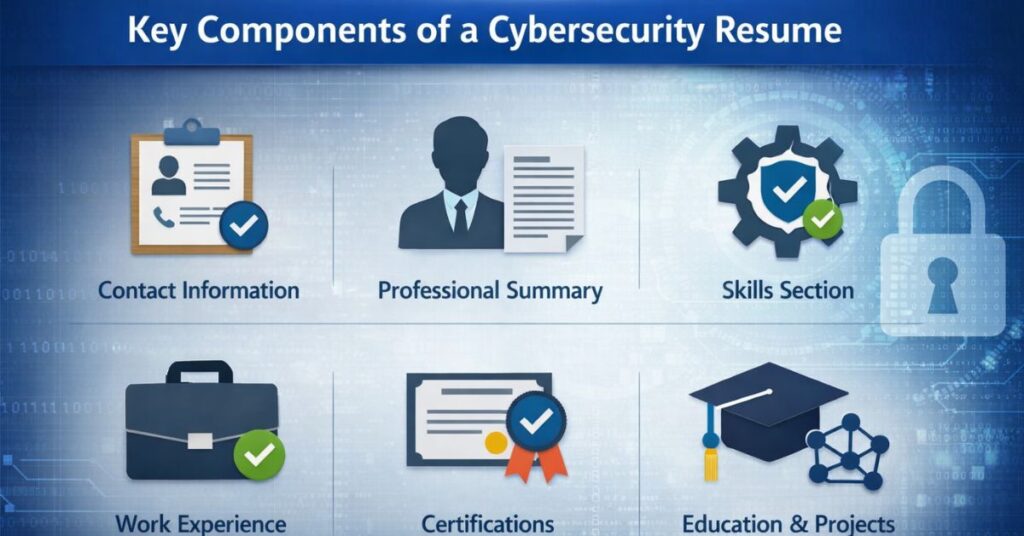
1. Contact Information
Your contact section should be simple yet professional. Include your full name, phone number, email address, and LinkedIn profile. Avoid adding unnecessary personal details like full address or unrelated social media accounts.
A clean and professional contact section builds credibility and ensures recruiters can easily reach you. Make sure your email address looks professional and not casual or outdated.
2. Professional Summary
The professional summary is one of the most important parts of your cybersecurity resume. It provides a quick overview of your experience and skills. This section should be concise but impactful, ideally 3–4 sentences.
For example, a strong summary might highlight your years of experience, key skills like network security or penetration testing, and any major achievements. Tailor this section based on the job description to increase your chances of getting noticed.
3. Skills Section
The skills section should clearly list your technical and soft skills relevant to cybersecurity. Recruiters often scan this section first, so it must include keywords from the job posting.
Technical Skills:
- Network Security
- Penetration Testing
- Vulnerability Assessment
- SIEM Tools (Splunk, QRadar)
- Firewalls and IDS/IPS
- Cryptography
- Incident Response
Soft Skills:
- Problem-solving
- Analytical thinking
- Communication
- Attention to detail
Using a mix of technical and soft skills helps show that you are both capable and adaptable in real-world scenarios.
4. Work Experience
Your work experience section should demonstrate how you have applied your cybersecurity knowledge in real situations. Instead of just listing responsibilities, focus on achievements and measurable results.
For example, instead of writing “Monitored network traffic,” you can write “Monitored network traffic and reduced security incidents by 30% through proactive threat detection.” This approach makes your resume more impactful and results-driven.
5. Certifications
Certifications play a crucial role in cybersecurity careers. They validate your skills and show your commitment to professional growth. Some of the most valuable certifications include:
- CompTIA Security+
- CEH (Certified Ethical Hacker)
- CISSP (Certified Information Systems Security Professional)
- CISM (Certified Information Security Manager)
Including certifications can significantly boost your credibility, especially if you are a beginner or transitioning into cybersecurity.
6. Education
Your education section should include your degree, institution name, and graduation year. If you have a degree in computer science, IT, or cybersecurity, highlight it clearly. You can also include relevant coursework such as network security or cryptography if you are a recent graduate.
7. Projects and Practical Experience
An employer values practical experience in cybersecurity, which is a hands-on field. If you lack professional experience, include personal or academic projects. For example, you might mention setting up a home lab, performing penetration testing on test environments, or participating in Capture The Flag (CTF) competitions.
Projects demonstrate your initiative and practical knowledge, which can often compensate for limited work experience.
Cybersecurity Resume Format Comparison
| Format Type | Best For | Advantages | Disadvantages |
| Chronological | Experienced professionals | Clear career progression | Not ideal for career gaps |
| Functional | Beginners or career switchers | Focuses on skills | Less preferred by recruiters |
| Hybrid | Most candidates | Balanced skills and experience | Slightly longer format |
You should select the format that is most appropriate for your experience level and career objectives. The hybrid format is generally the best choice for cybersecurity roles.
How to Optimize Your Cybersecurity Resume for ATS
Most companies use Applicant Tracking Systems (ATS) to filter resumes before a human even sees them. If your resume is not optimized, it may never reach the recruiter.
To improve your chances, include relevant keywords such as “cybersecurity,” “network security,” “incident response,” and “vulnerability assessment.” Use standard headings like “Experience” and “Skills” instead of creative alternatives. Avoid using images, graphics, or complex formatting that ATS systems cannot read.
Keeping your resume simple, structured, and keyword-rich ensures better visibility in automated screening systems.
Expert Tips to Make Your Resume Stand Out
A great cybersecurity resume goes beyond basic formatting. It should reflect your unique strengths and professional value.
First, tailor your resume for each job application instead of using a generic version. This increases your chances of matching the employer’s requirements. Second, focus on achievements rather than responsibilities. Numbers and measurable results always make a stronger impression.
Additionally, keep your resume concise and ideally limited to one or two pages. Use bullet points for clarity but avoid excessive listing. Finally, proofread your resume carefully to eliminate grammar errors and inconsistencies.
Common Mistakes to Avoid
Many candidates make simple mistakes that reduce their chances of getting hired. One common issue is including too much irrelevant information, which makes the resume cluttered and unfocused. Another mistake is failing to highlight achievements, which makes the candidate appear less impactful.
Using generic language without specific examples can also weaken your resume. Avoid outdated skills or technologies that are no longer relevant. Lastly, poor formatting can make your resume difficult to read and reduce its effectiveness.
Sample Cybersecurity Resume Summary
A strong summary can significantly improve your chances of getting shortlisted. Here is an example:
“Chris is a results-driven network security and threat analyst with more than three years of experience. Skilled in vulnerability assessment, SIEM tools, and incident response. Proven ability to identify and mitigate security risks, reducing system vulnerabilities by 25%. Passionate about protecting digital assets and staying updated with emerging cyber threats.”
This type of summary clearly communicates your value and sets a strong first impression.
Conclusion
Creating a strong cybersecurity resume is essential for standing out in today’s competitive job market. It is not just about listing your skills but presenting them in a way that demonstrates real value to employers. By focusing on achievements, using the right format, and optimizing for ATS, you can significantly improve your chances of landing interviews.
Remember that cybersecurity is a practical field, so showcasing hands-on experience and certifications is crucial. Keep your resume clear, concise, and tailored for each job application. With the right approach, your resume can become a powerful tool to advance your cybersecurity career.
You should include contact information, a professional summary, skills, work experience, certifications, education, and relevant projects. Focus on both technical and practical experience.
A cybersecurity resume should ideally be one page for beginners and up to two pages for experienced professionals.
Yes, certifications are highly valuable as they validate your skills and increase your credibility with employers.
You can make your resume stand out by highlighting achievements, using keywords, tailoring it for each job, and including real-world projects.
Yes, beginners can include projects, certifications, internships, and lab work to demonstrate their skills and knowledge.

Ali is an SEO specialist and technology content writer at Techsprinto, covering AI tools, SEO software, and blogging resources. He creates practical reviews and guides to help creators and marketers choose the right digital tools.
1 thought on “Cybersecurity Resume: Complete Guide to Get Hired”