


Choosing the right law firm web hosting is one of the most important decisions for any legal practice building an online presence. In today’s digital landscape, potential clients often search online before contacting an attorney. If a law firm’s website loads slowly, crashes frequently, or lacks security, it can immediately damage credibility and drive potential clients away.
Unlike standard business websites, law firm websites handle sensitive client information, confidential legal resources, and critical communications. This makes reliable hosting not just a technical requirement but also a matter of professional responsibility. Legal websites must prioritize security, uptime, and performance to maintain trust and meet ethical standards.
This guide explains everything you need to know about law firm web hosting, including essential features, security requirements, hosting types, comparison options, and expert tips to help lawyers choose the best hosting solution for their websites.
Why Law Firms Need Specialized Web Hosting

A law firm website is different from a simple blog or personal website. Legal professionals rely on their websites for client communication, lead generation, appointment scheduling, and sharing legal resources. Because of this, hosting requirements are typically more demanding.
First, law firms handle sensitive client data such as consultation forms, legal documents, and confidential communications. If the hosting provider lacks strong security protocols, this information could become vulnerable to cyber threats.
Second, website reliability directly impacts client trust. A slow or frequently unavailable website can make a firm appear unprofessional or outdated. Reliable hosting ensures that the website remains accessible to clients at all times.
Third, legal websites must often comply with data protection standards and cybersecurity best practices recommended by organizations such as the National Institute of Standards and Technology.
For these reasons, choosing the right hosting for lawyers is essential to maintaining both security and credibility.
Key Features of Law Firm Web Hosting
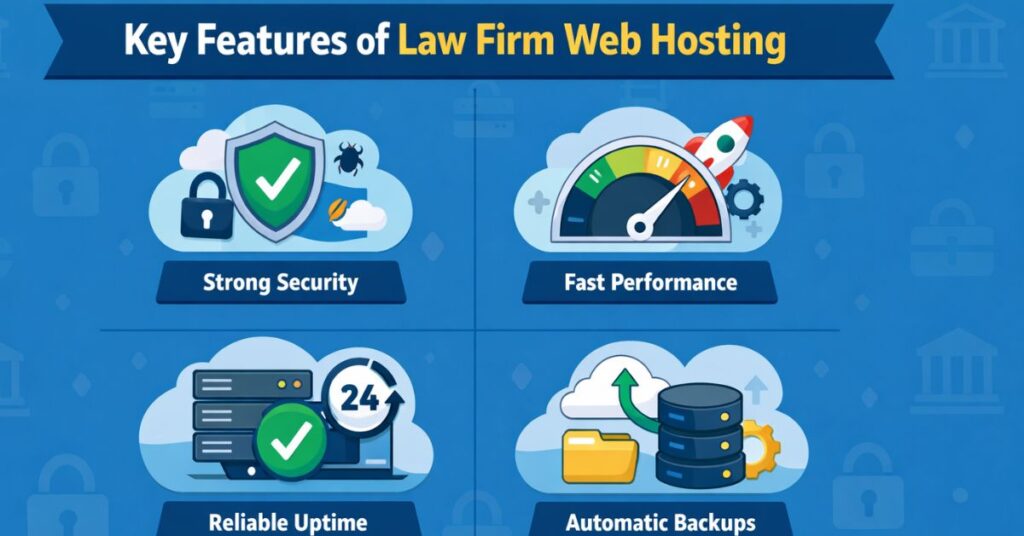
When selecting hosting for a legal website, there are several critical features that law firms should prioritize.
Strong Website Security
Security should always be the top priority for law firms. Since legal websites may store confidential client information, hosting providers must offer advanced protection measures. These often include SSL certificates, firewalls, malware scanning, and automated backups.
A secure hosting environment helps protect sensitive client communications and prevents cyberattacks that could compromise legal data.
Fast Website Performance
Website speed plays an important role in user experience and search engine rankings. If a website takes too long to load, visitors are likely to leave before exploring legal services.
High-performance hosting typically includes optimized servers, caching systems, and content delivery networks (CDNs) to ensure fast page loading times.
Reliable Uptime Guarantee
Law firms rely on their websites to generate leads and communicate with potential clients. Any downtime could mean missed opportunities or lost credibility.
A reliable hosting provider should offer at least 99.9% uptime, ensuring that the website remains accessible around the clock.
Automatic Backups
Regular backups protect websites from accidental data loss, hacking incidents, or technical errors. Hosting services designed for business or professional websites usually provide automated daily or weekly backups.
These backups allow law firms to quickly restore their websites if any problem occurs.
Professional Email Hosting
Law firms often use professional email addresses that match their domain name. For example:
contact@lawfirmname.com
Hosting providers frequently include email hosting services that allow lawyers to manage secure, professional communications with clients.
Types of Web Hosting for Law Firms
Understanding the different hosting options can help law firms choose the most suitable solution based on their website size, traffic, and budget.
Shared Hosting
Shared hosting is the most affordable option because multiple websites share the same server resources. While this option can work for small law firms with minimal traffic, it may not provide the performance or security required for larger legal practices.
VPS Hosting
Virtual Private Server (VPS) hosting offers a balance between affordability and performance. It provides dedicated resources within a shared environment, allowing better speed, security, and scalability.
Many growing law firms choose VPS hosting because it provides more control than shared hosting without the high cost of dedicated servers.
Dedicated Hosting
Dedicated hosting provides an entire server exclusively for one website. This option offers maximum performance, security, and customization.
Large law firms with high traffic websites or complex online systems often prefer dedicated hosting because it ensures complete control over server resources.
Managed WordPress Hosting
Many law firm websites are built using WordPress. Managed WordPress hosting offers optimized performance, automatic updates, and enhanced security specifically for WordPress websites.
This hosting type is particularly helpful for law firms that want reliable website performance without managing technical details.
Law Firm Hosting Comparison Table
The following table highlights key differences between popular hosting types for legal websites.
| Hosting Type | Best For | Cost Range | Performance | Security |
| Shared Hosting | Small law firms | Low | Basic | Moderate |
| VPS Hosting | Growing firms | Medium | Good | Strong |
| Dedicated Hosting | Large firms | High | Excellent | Very strong |
| Managed WordPress | WordPress sites | Medium | Excellent | Strong |
This comparison helps law firms determine which hosting solution matches their business needs and website goals.
Essential Security Practices for Legal Websites
Because legal websites may contain confidential information, security must be taken seriously. Following best practices helps reduce risks and protect sensitive data.
Some essential security practices include:
- Using SSL encryption for all website traffic
- Enabling firewall protection
- Installing malware scanning tools
- Performing regular software updates
- Creating frequent automated backups
Law firms should also ensure that hosting providers follow recognized cybersecurity guidelines supported by institutions such as the National Institute of Standards and Technology.
SEO Benefits of Reliable Law Firm Web Hosting
Good hosting not only improves website performance but also supports better search engine optimization (SEO). Fast and secure websites tend to rank higher in search engines because they provide a better user experience.
Reliable hosting contributes to SEO in several ways.
First, faster page load speeds reduce bounce rates and encourage visitors to explore the website. Second, stable uptime ensures that search engines can consistently crawl and index the website. Third, secure HTTPS websites are preferred by search engines and improve trust among visitors.
For law firms trying to attract new clients online, choosing the right legal website hosting can indirectly support better search visibility.
Expert Tips for Choosing the Best Hosting for Lawyers
Selecting the best law firm web hosting provider requires careful evaluation of several important factors. Legal professionals should focus on both technical features and long-term reliability.
Making the right choice is easier with these expert tips.
Choose a provider with strong security features. Law firms should prioritize hosts that offer firewalls, malware protection, and regular security updates.
Look for excellent customer support. Technical problems can occur at any time, so reliable 24/7 support is essential.
Ensure scalability. As the law firm grows, the website may need more server resources. Hosting providers should offer easy upgrade options.
Check backup policies. Automatic backups ensure that website data can be restored quickly if needed.
Review uptime guarantees. A minimum 99.9% uptime is recommended for professional websites.
Following these best practices helps ensure that a law firm’s website remains secure, fast, and reliable.
Common Mistakes Law Firms Should Avoid
While selecting web hosting, some law firms make decisions that can negatively impact their websites.
One common mistake is choosing the cheapest hosting provider without evaluating performance or security. Low-cost hosting may lack essential features needed for professional websites.
Another mistake is ignoring security measures. Legal websites must prioritize cybersecurity because they may handle sensitive client information.
Finally, some firms fail to plan for website growth. Choosing scalable hosting ensures that the website can handle increased traffic and additional features over time.
Avoiding these mistakes helps law firms maintain a professional online presence and protect their digital assets.
Conclusion
Choosing the right law firm web hosting is essential for building a secure, fast, and reliable legal website. Since law firms handle sensitive client information and rely on their websites to generate leads, hosting quality directly affects both credibility and business success.
The best hosting solutions provide strong security, excellent performance, reliable uptime, and scalable resources that support website growth. By carefully evaluating hosting options such as shared, VPS, dedicated, or managed WordPress hosting, law firms can select a solution that matches their specific needs.
Investing in professional web hosting ensures that a law firm’s website remains secure, accessible, and optimized for both users and search engines. This ultimately helps legal professionals build trust, attract more clients, and maintain a strong online presence.
Law firm web hosting refers to hosting services specifically suited for legal websites. These services focus on security, reliability, and performance to protect sensitive legal information and maintain professional credibility.
Lawyers often handle confidential client information through their websites. Secure hosting protects this data from cyber threats and ensures safe communication between attorneys and clients.
VPS hosting or managed WordPress hosting is often ideal for law firms because it offers strong performance, security, and scalability at a reasonable cost.
The cost depends on the hosting type. Shared hosting may cost a few dollars per month, while VPS or managed hosting can range from $20 to $100 per month depending on features.
Small law firms with basic websites may start with shared hosting. However, growing firms usually benefit from VPS or managed hosting for better performance and security.

Ali is an SEO specialist and technology content writer at Techsprinto, covering AI tools, SEO software, and blogging resources. He creates practical reviews and guides to help creators and marketers choose the right digital tools.
1 thought on “Law Firm Web Hosting: Best Hosting for Lawyers”