


Introduction
Digital payments have transformed the way businesses handle transactions. However, this rapid shift has also introduced serious security challenges. Credit card fraud, payment data theft, and unauthorized transactions continue to threaten both businesses and consumers. Because of these risks, companies now rely on advanced payment security technologies to protect financial transactions. One of the most important solutions developed for this purpose is EMV software.
EMV software plays a vital role in modern payment systems. It enables secure communication between payment cards, point-of-sale (POS) devices, and financial institutions. As a result, businesses can process chip-based payments safely and efficiently. Millions of payment cards around the world now use EMV chip technology, which ensures that every transaction includes authentication and encryption.
Today, businesses across many industries depend on EMV software to protect payment data and reduce fraud risks. Retail stores, restaurants, banks, and e-commerce platforms all use this technology to create secure payment environments. In this guide, we will explain what EMV software is, how it works, its key features, and why it is essential for modern payment systems.
What Is EMV Software?

EMV software is a specialized payment application that allows payment terminals and POS systems to process chip-based credit and debit card transactions securely. The term EMV stands for Europay, Mastercard, and Visa, the three companies that originally created this payment standard.
Unlike traditional magnetic stripe cards, EMV chip cards contain an embedded microprocessor. This chip generates a unique transaction code every time a payment occurs. Because each transaction uses a different code, criminals cannot reuse stolen card data. Consequently, EMV technology significantly improves payment security.
EMV software acts as the intelligence behind chip card payment systems. It enables communication between the payment terminal and the card’s microchip while ensuring that proper authentication protocols are followed. Once the system verifies the card’s authenticity, the software securely processes the transaction.
Today, EMV software is widely used in retail stores, banking terminals, mobile payment devices, and integrated POS systems.
How EMV Software Works
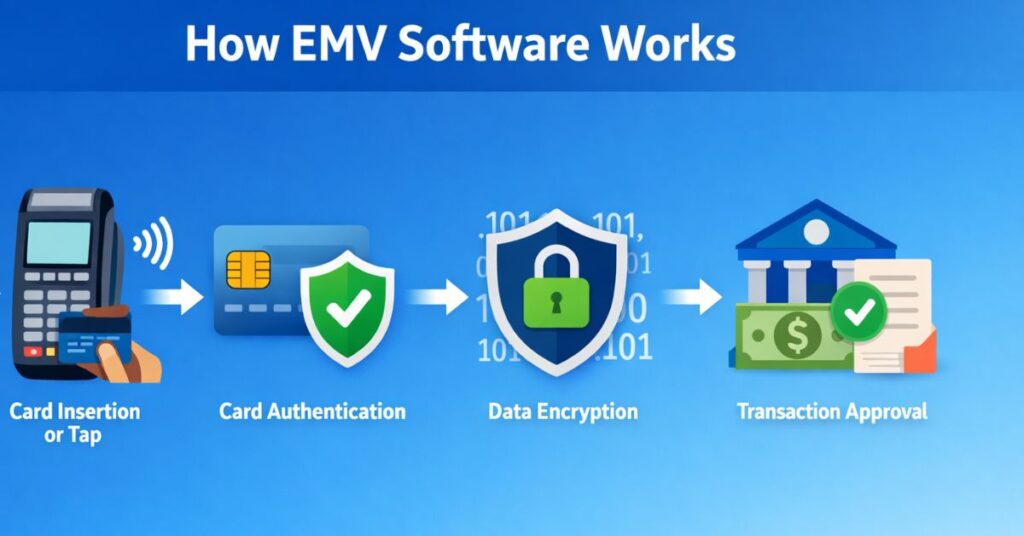
Understanding how EMV software works helps explain why it is so effective at preventing payment fraud. The transaction process includes several security steps that protect cardholder data.
Card Insertion or Tap
First, the customer inserts the chip card into the payment terminal or taps a contactless card on the reader. At this point, EMV software starts communicating with the card’s embedded chip.
Card Authentication
Next, the system verifies that the card is genuine. EMV software checks encrypted credentials stored inside the chip to confirm that the card has not been cloned or altered.
Transaction Data Encryption
After authentication, the system encrypts the transaction data before sending it to the payment processor. Each transaction generates a unique cryptographic code, which prevents data reuse.
Authorization Request
Then the payment processor sends the encrypted transaction request to the issuing bank. The bank verifies the cardholder’s account details and checks whether sufficient funds are available.
Transaction Approval
Finally, the issuing bank approves or declines the payment. If the transaction meets all security requirements, the bank sends an approval message back to the POS terminal.
Although this process involves several security checks, it usually takes only a few seconds to complete.
Key Features of EMV Software
Modern EMV software includes advanced features that help businesses maintain secure and efficient payment systems.
Secure Chip Authentication
EMV software verifies the authenticity of chip cards using built-in authentication protocols. Therefore, counterfeit cards cannot easily pass security checks.
End-to-End Encryption
The software encrypts payment data from the moment the card interacts with the terminal until the transaction reaches the payment processor. As a result, hackers cannot easily access sensitive customer information.
Contact and Contactless Payment Support
Most EMV solutions support both chip insertion and contactless payments. Consequently, businesses can accept tap-to-pay cards and mobile wallets without additional infrastructure.
Fraud Detection
Many EMV systems include fraud detection tools that monitor suspicious transaction patterns. If the system detects unusual activity, it can alert businesses immediately.
POS System Integration
Chip Card Technology software integrates seamlessly with modern POS systems. This integration allows businesses to manage payments, inventory, and customer transactions from a single platform.
Compliance Support
Payment security regulations require businesses to follow strict standards. Chip Card Technology software helps companies meet these requirements, including PCI DSS compliance.
Benefits of Using EMV Software
Businesses that adopt EMV Platform gain several important advantages.
Reduced Payment Fraud
First and most importantly, EMV technology significantly reduces credit card fraud. Because every transaction generates a unique code, criminals cannot reuse stolen card data.
Improved Customer Trust
Customers feel more confident when businesses use secure payment technologies. Therefore, EMV systems help improve customer trust and brand reputation.
Global Payment Compatibility
EMV technology is widely used worldwide. As a result, businesses can accept international chip cards without compatibility issues.
Faster Transaction Processing
Modern EMV software systems process payments quickly while maintaining strong security standards.
Support for Modern Payment Methods
EMV platforms support digital wallets and NFC payments. Consequently, businesses can accept modern payment options such as mobile tap payments.
EMV Software vs Magnetic Stripe Systems
Older payment systems rely on magnetic stripe cards that store static data. Unfortunately, criminals can easily copy this information. EMV technology solves this problem by generating dynamic authentication codes.
| Feature | EMV Software | Magnetic Stripe |
|---|---|---|
| Security Level | Very High | Low |
| Fraud Protection | Dynamic Encryption | Static Data |
| Transaction Code | Unique Per Transaction | Same Every Time |
| Global Adoption | Widely Used | Declining |
| Contactless Support | Yes | Limited |
Because of these advantages, many countries have already replaced magnetic stripe systems with EMV technology.
Common Use Cases of EMV Software
Many industries rely on Chip Card Technology software to secure payment processing.
Retail Stores
Retail businesses use EMV-enabled POS systems to accept chip cards and contactless payments. This technology helps prevent fraud during checkout.
Restaurants and Hospitality
Restaurants often use portable EMV payment terminals that allow customers to pay securely at their tables.
Banking and Financial Services
ATMs and banking terminals depend on EMV Platform to authenticate cards and protect financial transactions.
E-commerce Platforms
Although EMV mainly supports physical card transactions, online platforms use EMV-based tokenization to improve security.
Transportation Systems
Public transportation systems often allow passengers to pay fares using contactless EMV cards.
Best Practices for Implementing EMV Software
Businesses should follow several best practices when implementing EMV software.
- Choose certified EMV solutions from trusted providers
- Keep payment software updated regularly
- Train employees to handle secure transactions
- Use secure POS hardware and networks
- Monitor transaction activity for unusual behavior
These steps help businesses maintain strong payment security.
Future of EMV Software
Payment technology continues to evolve rapidly. As contactless payments and mobile wallets become more popular, EMV software is also improving to support faster and smoother transactions.
In addition, many payment systems now use artificial intelligence to detect fraud in real time. These tools analyze transaction patterns and automatically block suspicious activities before they cause damage.
Another emerging trend involves biometric authentication. In the future, payment systems may verify transactions using fingerprints or facial recognition alongside EMV chip verification.
Because digital payments continue to grow worldwide, EMV software will remain a key component of secure financial systems.
Conclusion
Chip Card Technology software plays a crucial role in protecting modern payment systems. It allows businesses to process chip-based card transactions securely while reducing fraud risks. Compared to older magnetic stripe technology, EMV solutions offer stronger authentication, better encryption, and greater global compatibility.
Businesses that adopt Chip Card Technology software can also support modern payment methods such as contactless cards and mobile wallets. Therefore, investing in secure EMV payment systems has become essential for companies that handle card transactions.
As digital commerce continues to expand, EMV technology will remain one of the most important tools for maintaining safe and reliable financial transactions.
EMV Platform processes chip-based credit and debit card payments securely by authenticating cards and encrypting transaction data.
Businesses that accept chip card payments typically need EMV-compatible payment systems to maintain security and compliance.
Yes, EMV Platform significantly reduces fraud because every transaction generates a unique encrypted code.
Yes, most modern EMV systems support both chip insertion and tap-to-pay transactions.
Magnetic stripe cards store static data, while EMV cards create dynamic encrypted transaction codes that improve security.

Ali is an SEO specialist and technology content writer at Techsprinto, covering AI tools, SEO software, and blogging resources. He creates practical reviews and guides to help creators and marketers choose the right digital tools.
1 thought on “EMV Software: Complete Guide to Secure Payment Processing”